// Deccan AI · Capability overview · RL · 3D · Robotics · Computer Use
Verifiable environments and data across RL, 3D, Robotics and Computer Use
Nine environments across four domains — three scored RL gyms; two 3D environments (agentic Blender authoring and a 6.8 TB industrial-CAD pack); expert computer-use demonstrations across four desktop apps; and robotics — a verified failure-and-recovery engine, egocentric real-world data collection, plus long-horizon spatial reasoning. Real tasks, verifiable grading or expert annotation, full evidence.
Deccan AI · 9 environments across 4 domains · RL · 3D · Computer Use · Robotics
Deccan builds verifiable environments and data across RL, 3D, Robotics and Computer Use — the areas you're building in. This package brings our work into one place: each a self-contained delivery with its own deep-dive report, every sample leading with the numbers.
Verifiable-RL gyms with scored rollouts, verifier evidence and per-failure analysis — representative samples we build and run at scale.
Reinforcement learning · SWELong-horizon SWE
Frontier SWE
Long-horizon software tasks that rebuild or speed up whole systems. Four re-implement a program without its source — a 3D frame renderer, an SVG plotting library, a CFD solver and a boundary-element solver — and one speeds up the dav1d AV1 decoder on a RISC-V vector CPU. Each is graded by its own hidden verifier on byte-exact output, numerical tolerance or instruction count, for partial credit.
Long-horizon tasks scaled to hours-to-days of agent time, built on the same research method as Frontier SWE. Each task sits in our taxonomy (implementation, optimization or ML / research), starts from what a real engineer would be handed (a spec, a probe of the original, or a working baseline and a metric to beat) and is graded by its own hidden verifier for partial credit, with correctness gates against shortcuts and reward hacking. Every rollout ships with full evidence (score, tool calls and peak context) and a per-failure analysis of where long-horizon work breaks down: lost state, drift from the spec and premature claims of completion.
Hard, reference-solvable terminal tasks across six categories — Security, Operations, Science, Hardware, ML and Media — benchmarked on thirteen frontier and open-weight models.
Model leaderboard50 tasks · 13 models
#ModelPass rate
1GPT-6 AstraOpenAI54.4%
2Gemini 4 ArgonGoogle54.0%
3Opus 5.5Anthropic47.2%
4GPT-6.1 SolOpenAI44.8%
5Fable 5.1Anthropic41.2%
6Sonnet 5.5Anthropic31.6%
Show all 13 models
7Kimi K3Moonshot AI14.4%
8MiMo-V2.6-ProXiaomi10.4%
9GPT-6 SolOpenAI10.0%
10GLM-5.3-FlashZhipu AI8.8%
11Grok 4.7xAI6.4%
12Qwen3.8-27BAlibaba Qwen4.4%
13DeepSeek V4-FlashDeepSeek2.4%
Pass rate = share of trials that earned full credit; five trials per model per task.
Verifiable RL environments built on high-fidelity clones of the apps teams use every day: messaging, email, calendar, issue tracking, CRM and documents. Agents carry out multi-step workflows that cross several apps through each app's own tools, and every episode is scored by checks on the final state of each app's data.
Cross-gym agent tasks across five simulated SaaS products — XSN, Xalendly, Xubspot, Xmail and Xira — each scored by atomic database-expectation verifiers after live browser execution.
Model leaderboard50 tasks · 6 frontier models
#ModelPass rate
1Fable 5.1Anthropic43.5%
2GPT-6.1 SolOpenAI36.2%
3GPT-6 AstraOpenAI34.5%
4Opus 5.5Anthropic32.1%
5Sonnet 5.5Anthropic27.6%
6GPT-6 SolOpenAI22.4%
Pass rate = share of runs that earned full credit; infrastructure errors excluded.
Long-horizon coding tasks mined from live private production codebases, authored via an LLM + human-in-the-loop pipeline and calibrated on a fixed harness — the reference solution scores 1.0, the empty submission 0.0.
Model leaderboard50 tasks · 7 models
#ModelPass rate
1Opus 5Claude Code54.3%
2Kimi K3mini-swe-agent51.8%
3Fable 5.1Claude Code50.6%
4Gemini 3.8 Flashmini-swe-agent50.3%
5GPT-6 AstraCodex48.2%
6GLM-5.3mini-swe-agent46.8%
7GPT-5.6 SolCodex44.8%
Pass rate = share of runs that earned full credit; infrastructure errors excluded.
Verifiable 3D authoring, and 3D at industrial scale.
3D · Verifiable authoring environmentAgentic 3D · bpy
Blender bpy Agent Episodes
172
deterministic end-state checks against the saved .blend
A verifiable 3D-authoring environment: an agent writes Python (bpy) to build 3D scenes, and every episode is graded by an end-state verifier that re-opens the saved scene in a fresh Blender and renders it from the harness, not the agent.
3D · Industrial CAD & fabricationReal-world dataset
Structural Steel Data Pack
6.8 TB
real US steel-detailing production data
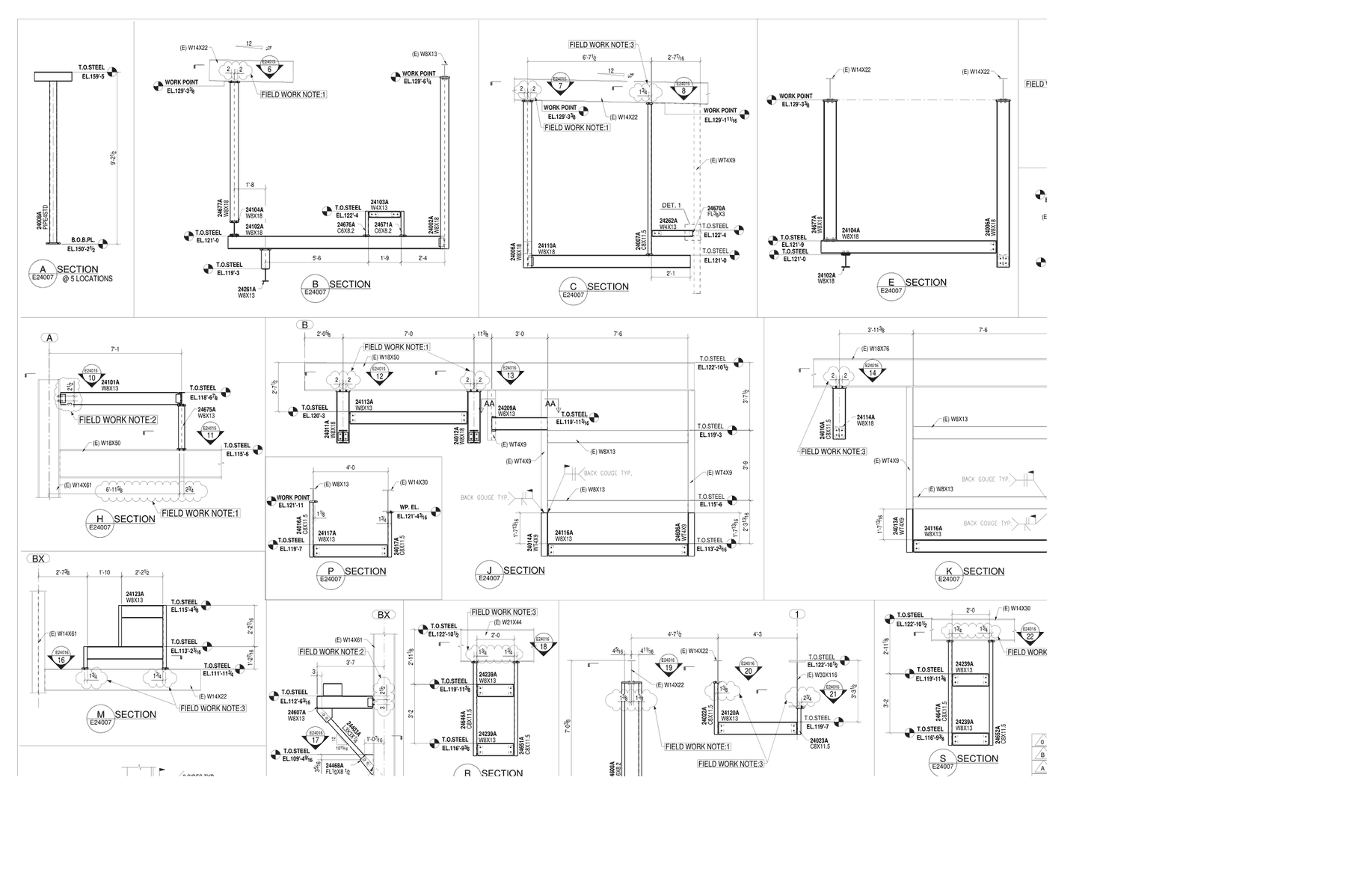
A 6.8 TB structural-steel fabrication dataset — coordinated 3D models (STEP, IFC, Tekla), 2D shop drawings and CNC programs from live US fabrication work, all linked by piece mark: 3D model → drawing → machine code.
Interactive 3D · structural steel frame — drag to rotate
Expert demonstrations for training computer-use agents on professional desktop apps.
Computer Use · Desktop appsExpert demonstrations
Computer-Use Agent Demonstrations
10,745
logged actions across 20 expert samples (4 pro apps)
End-to-end expert demonstrations for training computer-use agents across four professional desktop apps — Blender, Photoshop, PowerPoint and Excel. Deterministic event logging (not video inference), operator narration, and human-written chain-of-thought reasoning.
A verified failure-and-recovery engine, egocentric real-world data collection, and long-horizon spatial reasoning — plus a hand keypoints & retargeting benchmark.
An engine that manufactures realistic robot-failure trajectories and provably-working recoveries in rich simulated scenes — then proves the data transfers. A standing supplier of on-demand failure-recovery data in LeRobot format, every recovery machine-verified to complete.
Demo · front view — bimanual fruit-sort (Franka Panda)
Robotics · Egocentric data collectionReal-world embodied capture
Egocentric Data Collection
20,000+ hrs
and growing, across diverse environments
We collect a mix of embodied, egocentric data from diverse environments — households, factories and warehouses — across a full sensor suite: monocular & stereo head cameras, wrist cameras, motion trackers, UMI grippers and full-body motion capture. Every capture goes through multi-layer human QC and VLM-judge validation. Custom sensor specs on request.
Robotics · Video → 3D spatial layoutJudged vs. ground truth
Long-Horizon Spatial Reasoning & Memory
10
model outputs scored against Zillow ground truth (Opus-5 judge, 0–100)
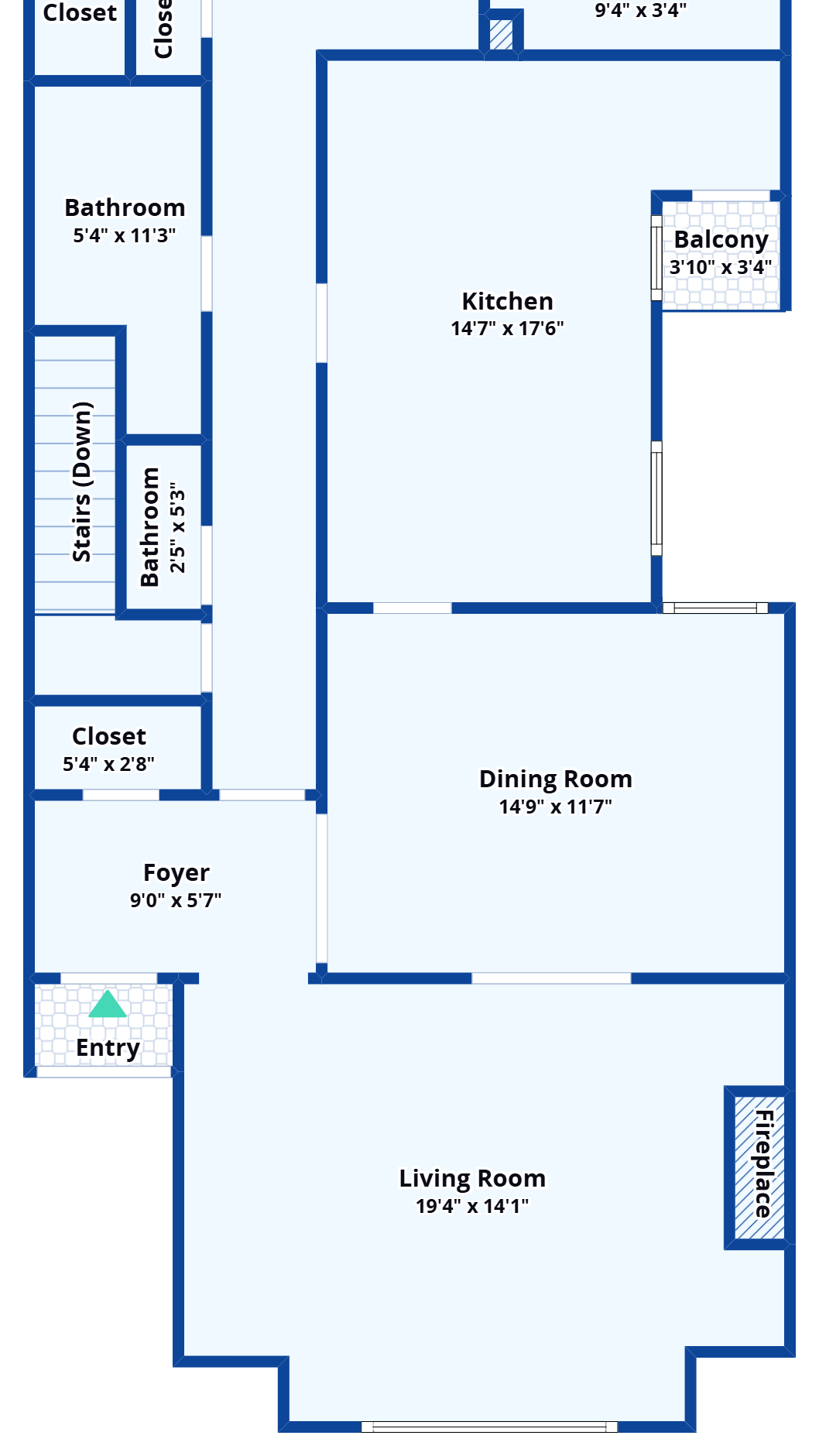
Given an egocentric video walkthrough, the agent must reconstruct a globally consistent 2D spatial layout. Because ground-truth layouts exist, you get deterministic rewards for topology, geometry and connectivity, which enables scalable RL and evaluation. Agents that succeed demonstrate long-horizon spatial reasoning and memory — key to embodied AI and robotics.
Robotics · Hand keypoints & retargetingBenchmark · analysis report
BeeHand3D — 3D Hand Keypoints & Retargeting
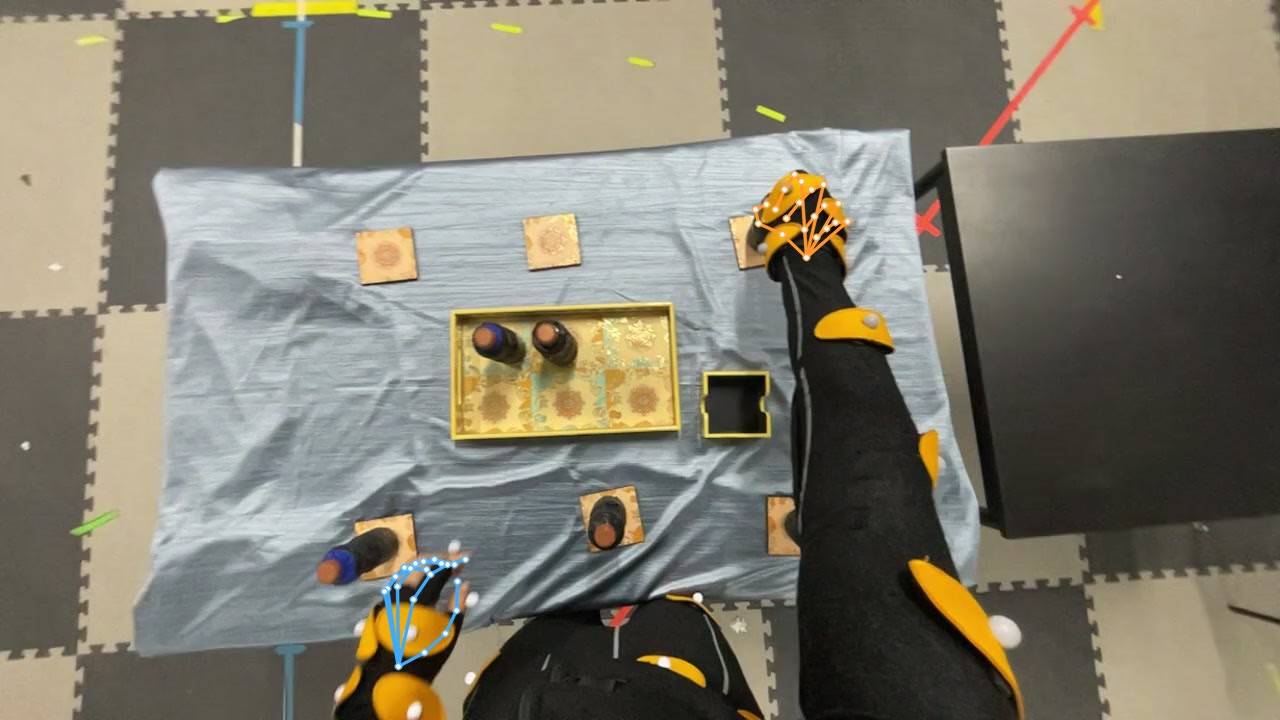
A benchmark and analysis report — not a standalone environment. BeeHand3D is our team's 3D hand-tracking and retargeting algorithm, developed as part of the Bumblebee project: it reconstructs 21 3D hand joints from egocentric video and retargets them onto dexterous hands. Measured against motion-capture ground truth on 63 takes, with the same IK solve applied to four published models, it comes out ahead on both LEAP and Shadow retargeting. The report has interactive 3D viewers and per-take breakdowns.
Input · egocentric frame with 21-joint keypoints
Output · keypoints retargeted onto the LEAP dexterous hand
Across RL, 3D, Robotics and Computer Use we build and operate these environments and datasets at scale — with the same standard of verifiable grading, full evidence, and per-failure analysis you see in each report here.
We'd be glad to talk through scaled operations, custom environment and dataset builds, and OTS access for any of these lines — including custom robot embodiments, tasks and failure taxonomies through the FailRec engine.